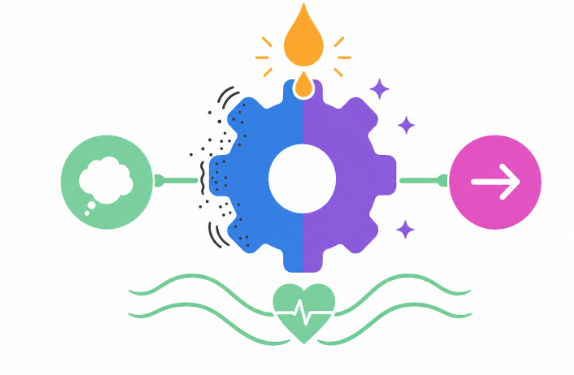
This guide explores limbic balance and emotional regulation through a mechanical lens: inputs, processes, outputs, and maintenance cycles. When you see your mind as equipment worth caring for, self-improvement stops being vague and starts being procedural.
We begin with baselines. Before changing a system, measure it. Sleep latency, morning clarity, afternoon crash time, evening rumination — pick three metrics that matter to you and track them for one week without trying to fix anything yet. Awareness is the diagnostic phase.
Next comes alignment. Many people attempt upgrades while running incompatible software: eight hours of shallow stimulation, zero movement, irregular meals, then wonder why deep work feels impossible. Alignment means your daily inputs match the outcomes you advertise to yourself.
- Protect one 90-minute focus block daily — non-negotiable.
- Batch messaging into windows instead of constant drip.
- Use movement snacks: two minutes every hour counts.
- End the day with a three-line shutdown note for tomorrow-you.
Finally, maintenance. High-performance minds need scheduled tune-ups, not emergency repairs. Weekly reviews, monthly recalibrations, quarterly skill upgrades — this rhythm prevents the boom-bust cycle that burns people out.
The Joy Mechanics library is designed for exactly that cadence: short videos for motivation, PDF protocols you can print, and articles you can revisit when friction creeps back. Pick one resource, apply it for seven days, then stack the next. Compounding beats intensity.